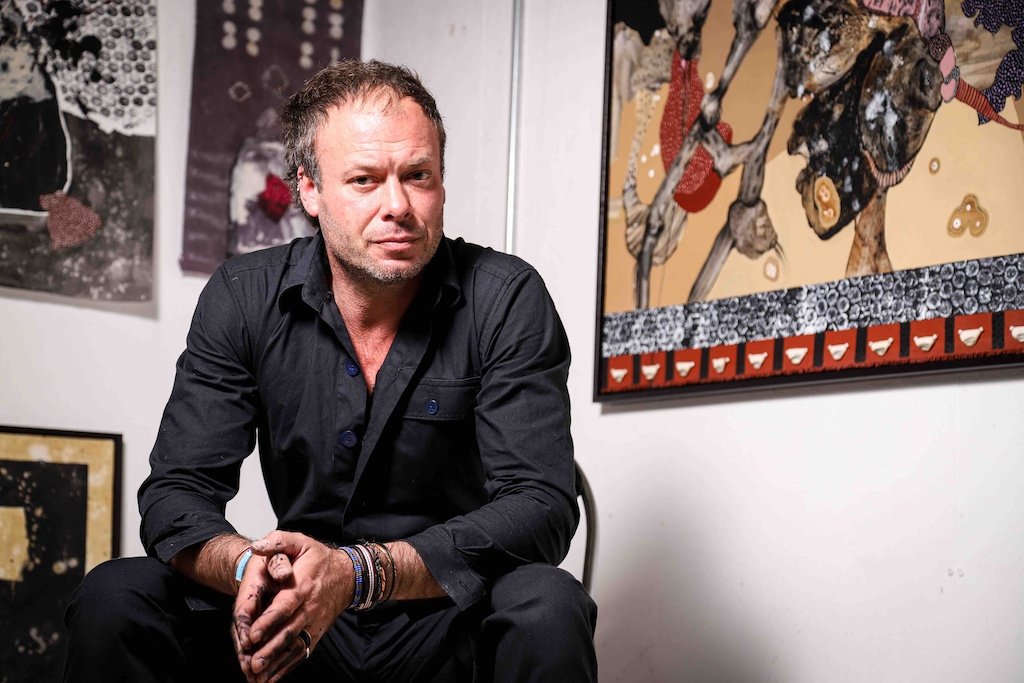
Marc Standing’s paintings involve layers of meaning; in contemplation, empathy, catharsis and the elevation of the spirit. The abstract values of art, proportion, balance, colour, tone, and the management and exploitation of pictorial space, are of the utmost value to his work whether in a non-figurative sense or as supports for figures in an implied narrative.
His latest body of work, currently being exhibited at Grove Square Galleries in the show The Whispering Tongues, opens a dialogue between artist and viewer and poses the question: who can be an African artist?
“I think being a white African, so to speak, I think in the art world we really are almost seen as not truly African,” Standing suggests when we meet at his studio in Wembley ahead of his first solo show with Grove Square Galleries.
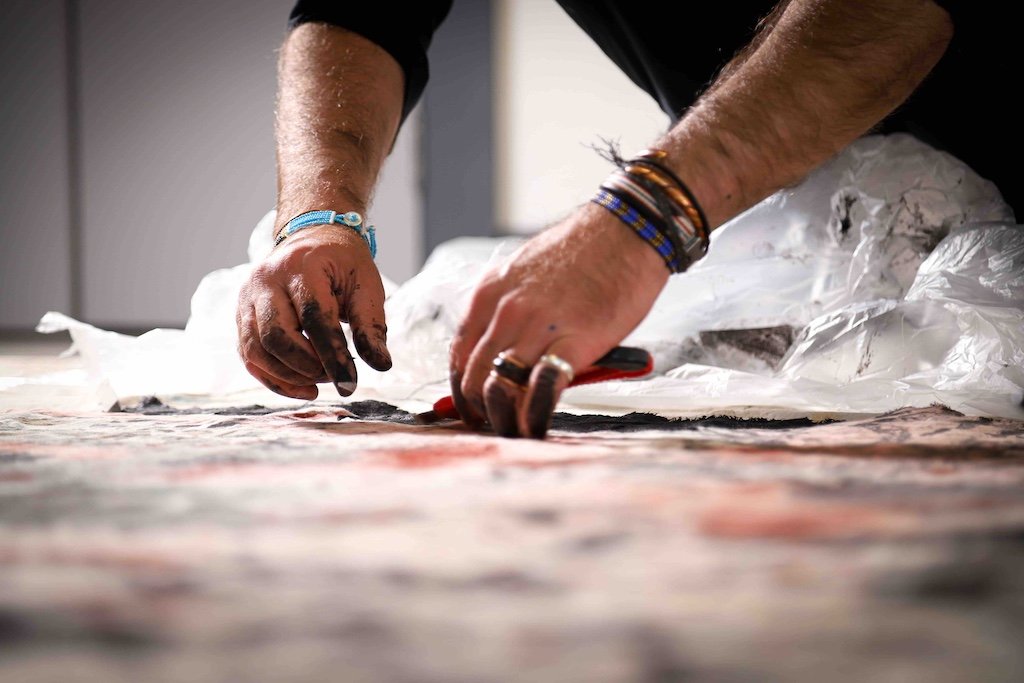
As I examine the unframed paintings hanging on the wall and laying on the floor, it becomes clear to me that he has that element, that je ne sais quoi dealers and collectors are always looking for: a signature. It has taken Standing some 20 years to build and define his own style and voice. “I think to come up with something that is a unique language especially nowadays with everything around us and everything that we see is quite difficult,” he tells me.
An African artist in exile
I first became aware of Standing’s work in Shanghai when I saw one of his paintings in a group exhibition at Art Labor in 2016. Then coincidentally in 2018 we both relocated to London and I’ve kept a close eye on his development since, even writing a piece about his artistic life in Australia and Asia.
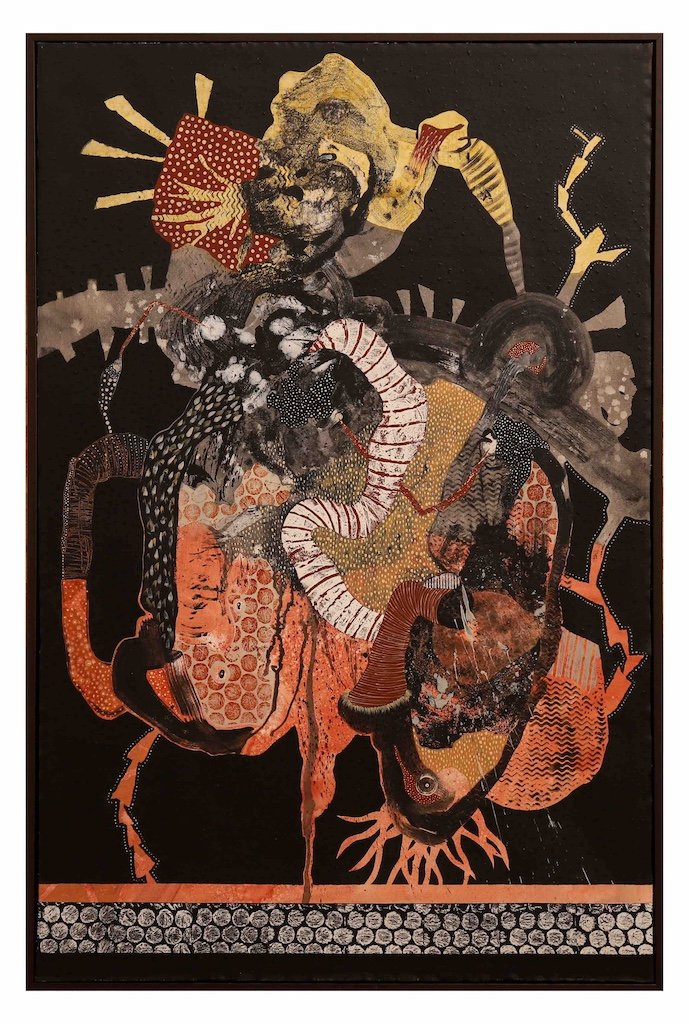
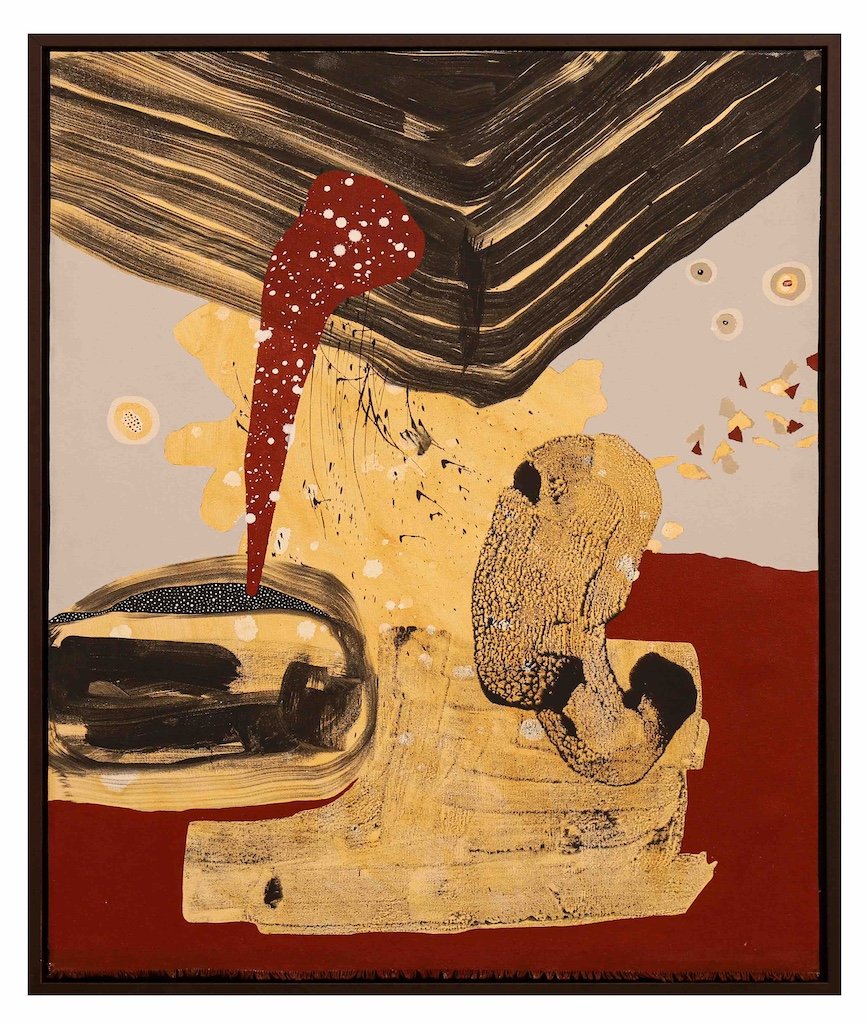
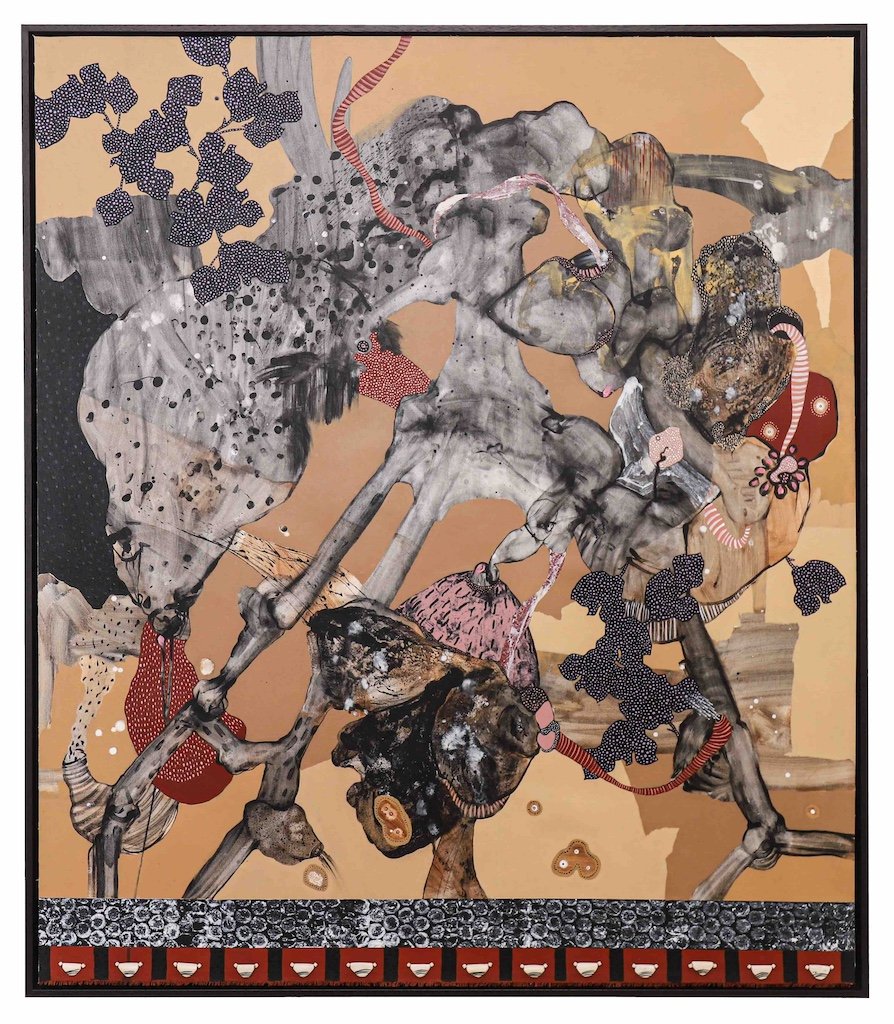
Having followed his practice over the past five years I can see changes in his paintings. Each canvas has become less frenetic and there are fewer colours; the work has become more honed, each piece refined somewhat. In his latest work, the paintings are limpid and restful, with colours dry and burnt, like the colours of Africa. There is a heroic and romantic air in The Dream Catchers and it seems as if The Whispering Tongues is faintly vibrating. The Invisible World is Africa wandering, dancing and entertaining you. These pieces are Africa distilled.
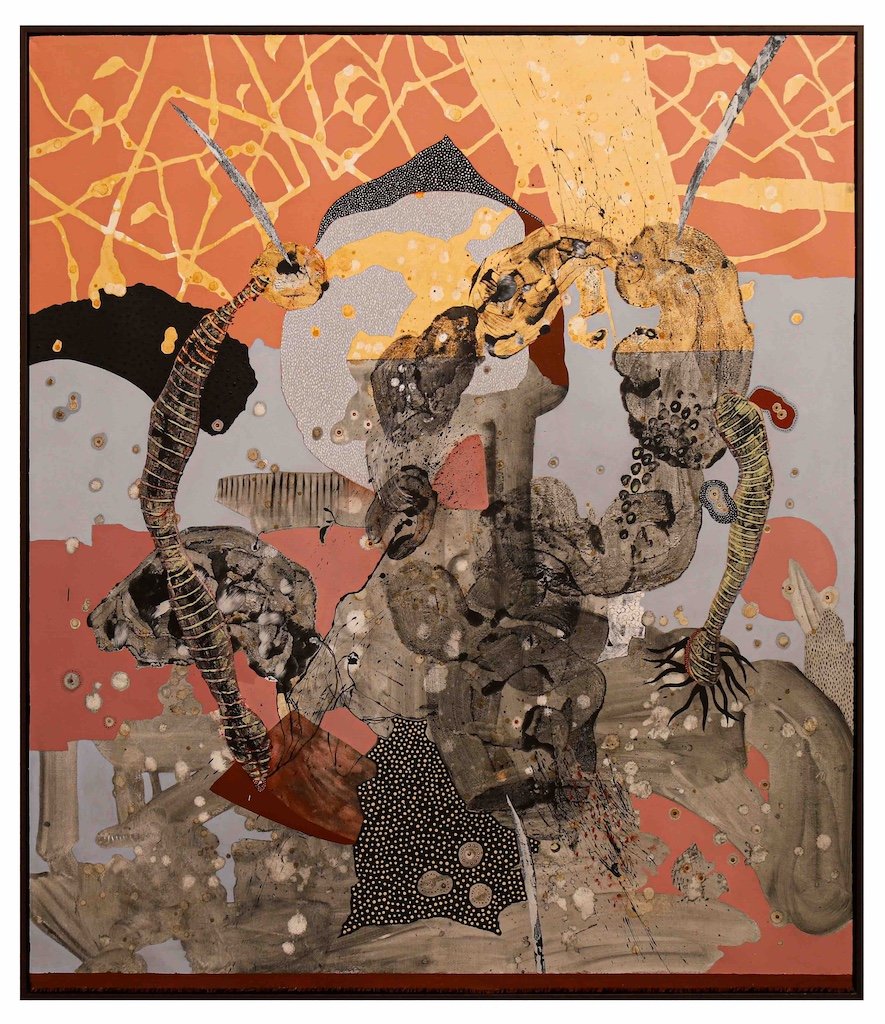
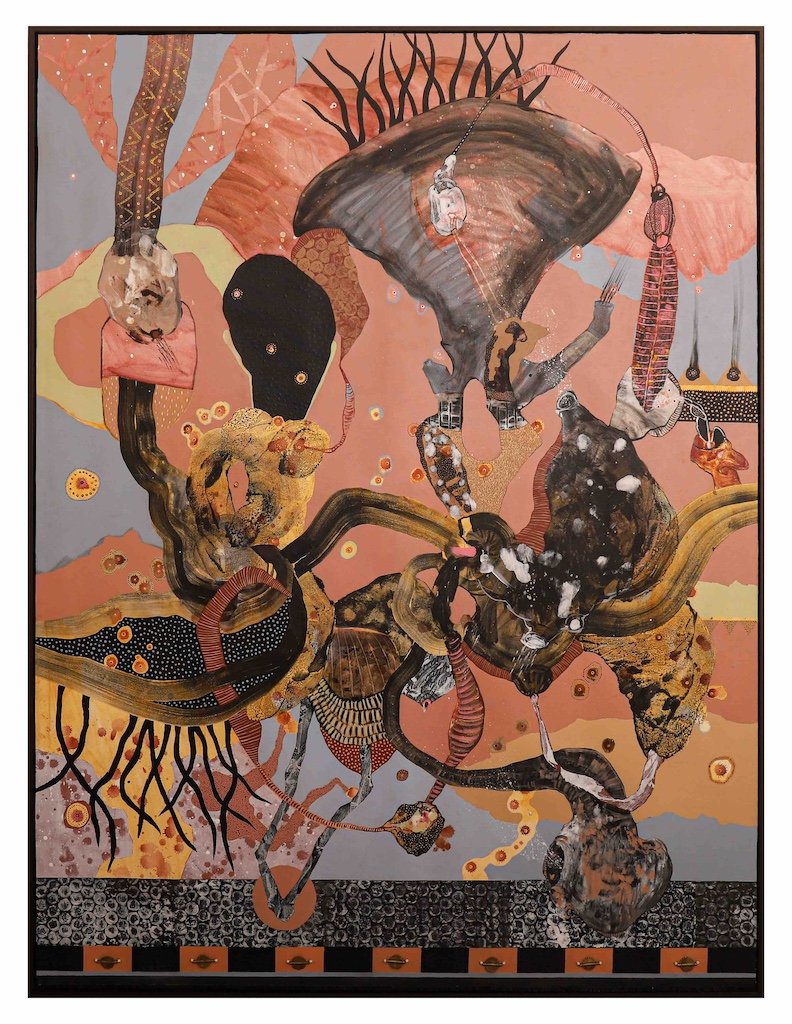
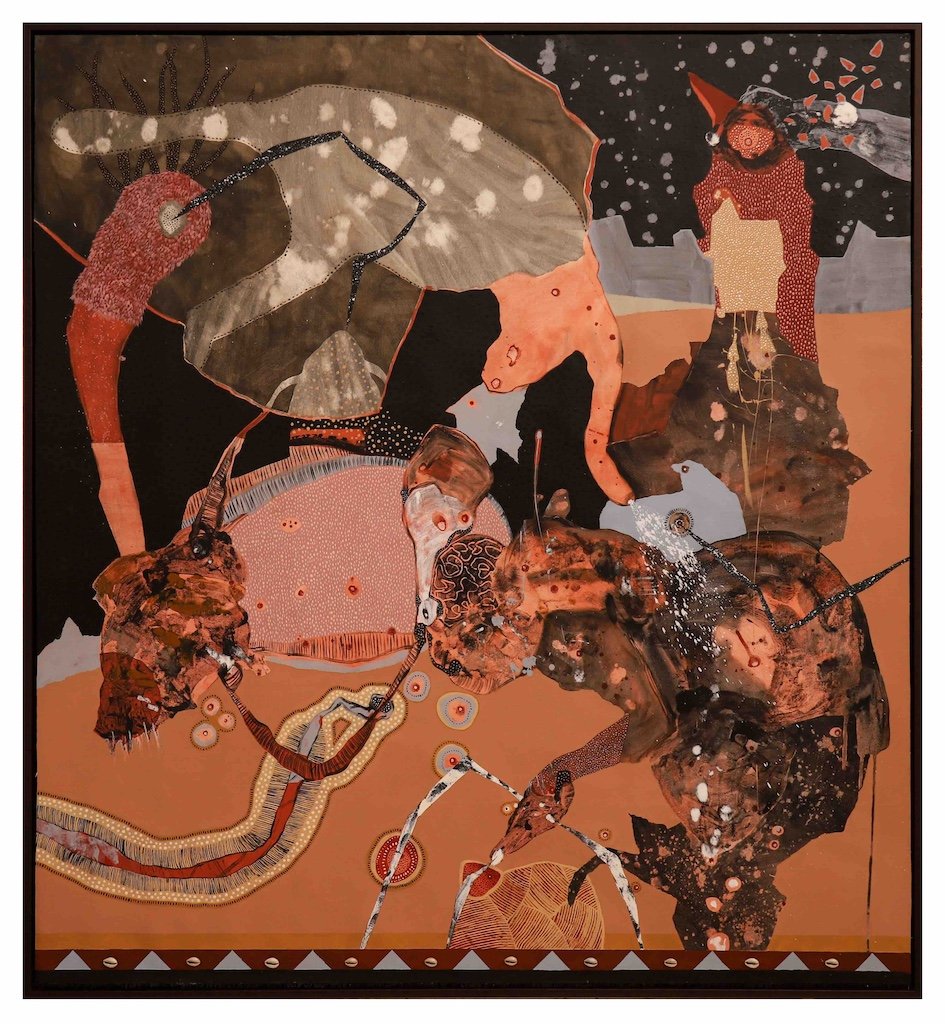
“Being in Kenya I was very very lucky that I had great people behind me there,” Standing explains, telling me that these paintings were inspired from a sojourn in Africa at the beginning of 2021. “It was like my own little residency basically.” Luckily, he was able to make it to Kenya between UK lockdowns when borders briefly opened. He stayed in Nairobi with a good friend who is married to Wangechi Mutu, the Kenyan-American visual artist who is part of the Afrofuturism movement. “I think being in Kenya I was really ready,” Standing continues, “so to go back there and spend that amount of time there and really just paint there, it was like going home.”
Standing left Zimbabwe with his family at the turn of the twenty-first century when social tensions peaked and many white Zimbabweans were forced into exile due to Robert Mugabe’s repressive politics, which lead to hyper-inflation and a broken economy. Even though his father is English and he has a UK passport he’d never lived in England before moving to London in 2018. “I wouldn’t say that I’ve got an English or British identity because I’m really recent to this place. I lived in Hong Kong for seven years, I lived in Australia for five years,” he explains. Which brings us back to the question posed earlier on African identity. “That is a good question because I was having a discussion with Wangechi,” Standing starts.
“She said something to me that was quite profound. She said ‘are you an African artist or are you from Africa?’ I think those two things are really quite different. I think going back now it was very insightful for me because it made it very evident to me that I am an African artist, that I’m not just from Africa.”
A reconnection with Africanism
Standing didn’t plan to stay in Kenya and produce a new body of work, circumstances panned out that way. This has created a spontaneity in his latest paintings that has allowed him to develop a strong and refined oeuvre imbued with the essence of the continent of Africa. “I was in Nairobi most of the time but I went up the coast and took smaller pieces with me, and I was on this island and just painting outside under this covering in the sand outside my little place. It was really really amazing.”
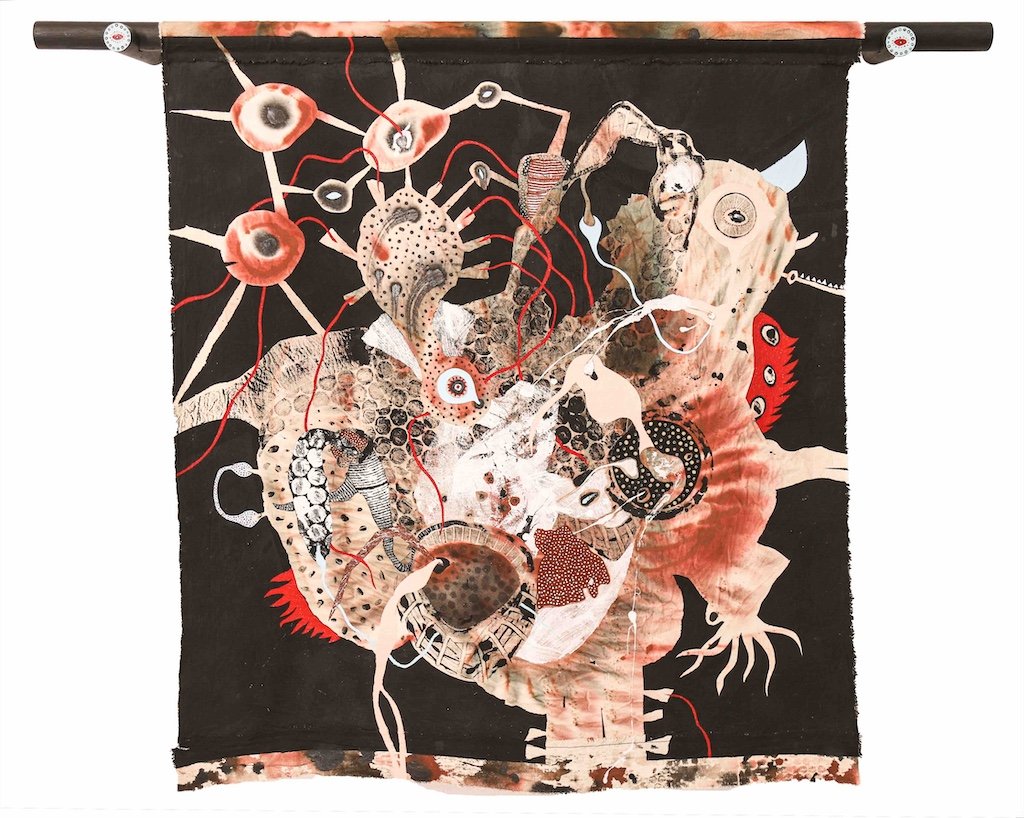
The colour palette throughout these new works is somewhat of a departure from his Australian and Asian paintings, even from the early London pieces, which used many pastel pink, green and purple hues. It is stark how these paintings have been influenced by being back in Africa; the black, gold, ochre and crimson taking the viewer on his journey, the sand colour, that pale or violet blue of the African sky, conjuring weightless ever changing clouds.
The expansive use of black in these works is also a divergence from his previous paintings as well. “I’ve never used black like this before really. There’s a lot more black in the paintings and the actual shift of the colour palette to more earthy organic colours has been very interesting.” For anyone new to Standing’s work it’s hard to state how significant this change is. If these new works are a reconnection with his Africanism then the use of black is literally exposing how deep this change has been for him, reaching inside, revealing the true African artist within.
Abstraction as a way to find identity
In life, people want simple labels. When things are labelled or categorised it’s much easier for people to digest. “It’s ironic that with art that’s what people try and do too,” Standing says. His paintings are concerned with the interactions between line, mark making, colour and form within the realm of abstraction. Yet, this label is itself too simplistic.
Much of contemporary abstract art falls on the side of being venal, of having no purpose but to be decorative; think Zombie Formalism, art made solely to flatter monied interests without regard for genuine meaning. The difficult metaphysical themes Standing wants to explore and put into his work is best conveyed through abstraction because, “it takes time to understand where that work is coming from, and if you’re working in a more spontaneous and subconscious way obviously it takes time to understand what was going on in your head, and in your heart as well, when you were making that work.”
These works that Marc Standing presents in The Whispering Tongues expose a vital assurance and lightness of heart that tell us who he really is as a person and an artist. “I think of my work as more individual pieces. I think also I’ve found it interesting over the years to see what work has come out depending on where I’ve been living and how I’ve been feeling. I think to me they are very personal.” It is evident from his latest abstractions that Standing has found his place as an African artist, a white African artist.
Leave a Reply